by Lavanya Singh If you think about how long Shinhwa has been around, you don’t need to look past their 14th anniversary press conference, where member Jun Jin put things into perspective for everyone: “The members of Girls’ Generation were in elementary school when we were in SM Entertainment. Jessica and Hyoyeon wrote us letters back […]
https://kultscene.com/wp-content/uploads/2015/08/DSC_09891.jpg531800KultScenehttps://kultscene.com/wp-content/uploads/2018/02/KULTSCENE-LOGO-2018-TRANSPARENT-RED.pngKultScene2018-04-05 09:43:382018-04-05 09:43:38The Shinhwa story: 20 years young & still going strong
Finally after a year and five months, the very last LOONA girl, Olivia Hye, was revealed. It’s a testament to the time and effort put into the project that so many people were eagerly anticipating this moment and the moments still to come. LOONA has given us probably the most interesting debut roll out in […]
https://kultscene.com/wp-content/uploads/2018/04/LOONA_all_members_collage.png15621564Joe Palmerhttps://kultscene.com/wp-content/uploads/2018/02/KULTSCENE-LOGO-2018-TRANSPARENT-RED.pngJoe Palmer2018-04-03 05:22:512018-04-03 05:22:51The 12 LOONA Solo Singles Ranked
by Lavanya Singh If you think about how long Shinhwa has been around, you don’t need to look past their 14th anniversary press conference, where member Jun Jin put things into perspective for everyone: “The members of Girls’ Generation were in elementary school when we were in SM Entertainment. Jessica and Hyoyeon wrote us letters back […]
https://kultscene.com/wp-content/uploads/2015/08/DSC_09891.jpg531800KultScenehttps://kultscene.com/wp-content/uploads/2018/02/KULTSCENE-LOGO-2018-TRANSPARENT-RED.pngKultScene2018-04-05 09:43:382018-04-05 09:43:38The Shinhwa story: 20 years young & still going strong
Finally after a year and five months, the very last LOONA girl, Olivia Hye, was revealed. It’s a testament to the time and effort put into the project that so many people were eagerly anticipating this moment and the moments still to come. LOONA has given us probably the most interesting debut roll out in […]
https://kultscene.com/wp-content/uploads/2018/04/LOONA_all_members_collage.png15621564Joe Palmerhttps://kultscene.com/wp-content/uploads/2018/02/KULTSCENE-LOGO-2018-TRANSPARENT-RED.pngJoe Palmer2018-04-03 05:22:512018-04-03 05:22:51The 12 LOONA Solo Singles Ranked
If you think about how long Shinhwa has been around, you don’t need to look past their 14th anniversary press conference, where member Jun Jin put things into perspective for everyone: “The members of Girls’ Generation were in elementary school when we were in SM Entertainment. Jessica and Hyoyeon wrote us letters back in the day.”
That was six years ago.
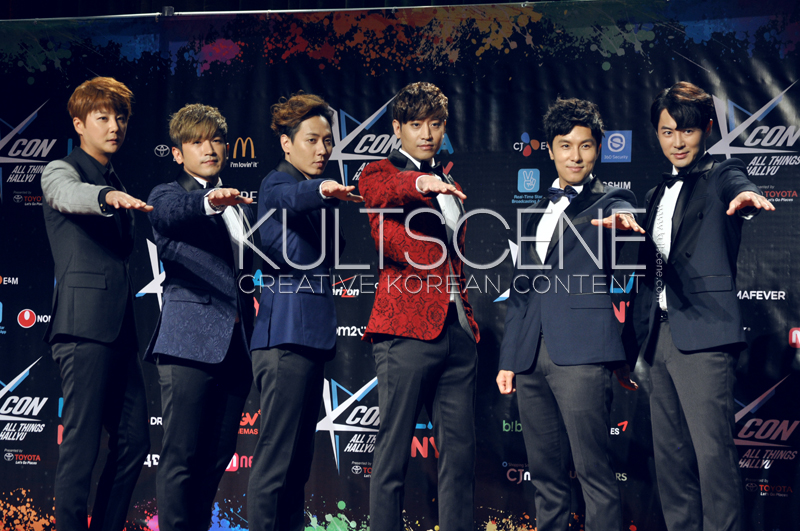
On March 24th, Shinhwa celebrated their 20th anniversary. Rightly, the band is listed in the Guinness Book of World Records as the longest-running boy group in the world that hasn’t disbanded or had a member leave in 19—well, 20 now—years. A closer look at the band and its popularity, however, pegs Shinhwa as artists who transcend numbers and charts, and who have found permanence in an otherwise transient industry.
The Start
The six members of Shinhwa debuted on March 24, 1998 under SM Entertainment, performing the single “Resolver” on KM Music Tank. To say that the band had a rocky start would have been an understatement—accusations of being a copy of label-mates H.O.T and the controversy following the Sokcho water accident that overshadowed the promotions of their song “Eusha Eusha” soon sparked rumours of disbandment. With the exception of some songs, the group’s debut album did not chart well, leading people to speculate that the band may have been a bad investment for SM.
With their second album “T.O.P,” however, came an edgier concept and mainstream success. “T.O.P.” won Shinhwa their first major music award for “Best Music Video”, and the trajectory only went upwards after that.
A Long Line of Firsts
As both fans and writers, we know how much modern K-pop owes to the so-called first wave of Korean music. Not only was the era a fantastic prelude to the all-encompassing force of nature that K-pop would eventually become, but the artists who defined that wave also left behind a legacy that would inspire and drive the future generations. Seo Taiji and the Boys, for example, gave Korea quite possibly its first tryst with R&B, and member Yang Hyun Suk later established one of South Korea’s premier entertainment companies, YG Entertainment. S.E.S, one of K-pop’s early girl group successes and the first girl group from SM, would later go on to inspire numerous other girl groups.
For as long as they’ve been around, therefore, it’s only inevitable that Shinhwa’s legacy be an ode to their popularity. What’s surprising, though, is knowing just how much contemporary idol and fan culture owes to the band and their fandom, “Shinhwa Changjo”. (The name means “making a legend”, aptly complementing the band’s own name meaning ‘myth’ or ‘legend’.)
In 2002, while still under SM, the band released their sixth studio album, thus officially becoming the longest-running act in K-pop. A year later, while reviewing their contracts, SM offered to renew contracts with all members except vocalist Dong Wan. Rather than splitting up, Shinhwa decided not to renew their contracts with SM, and departed from the company as one unit, signing later with Good Entertainment. As somewhat of an unspoken trend in K-pop, artists who leave one company for another often experience a wane in popularity. Shinhwa, however, is one of the only bands in K-pop whose members went on to have incredibly successful careers despite a company change and the mandatory military enlistments. In fact, their first Daesang (or Grand Prize), for the seventh studio album Brand New, came in 2004, almost a year after leaving SM.
But just because they left the label that formed them didn’t mean Shinhwa broke away from SM entirely. In 2013, member Min Woo looked fondly upon his time at SM, saying: “[Founder] Lee Soo Man is truly an amazing person. From each member’s hairstyles to everything we did on stage, he took care of us meticulously. He used to talk to all of us about every little thing.”
Following their mandatory military enlistments, Shinhwa became the first K-pop group to establish their own entertainment company in 2011. For a while, the band was locked in a legal battle with SM Entertainment and Joon Media (formerly Open World Entertainment) for profits and use of the name ‘Shinhwa’. The case was, however, settled in 2015, and Shinhwa Company (which had been dubbed ShinCom for the duration of the case) came into existence.
Shinhwa was also one of the early trendsetters in the industry in terms of musical control. While their creative license was limited under SM, the members participated actively in the production of their albums after leaving. By that time, most members had released solo music and found their personal styles. The result was an eclectic combination of sounds on future albums, making the band a truly versatile act.
It’s not just their music and their exceptional team spirit that set Shinhwa apart, though: the band was the first in the industry to break away from the mainstream style of the time. When much of K-pop focused on trendy skinny jeans and bright colors (think SHINee’s “Replay” era), Shinhwa adopted a much more sophisticated style with clean-cut suits and cropped hair—quite uncommon for popular acts at the time.
Also uncommon was Shinhwa’s dedicated fandom, Shinhwa Changjo, who, honestly, were fandom goals before the term went mainstream. Shinhwa Changjo are credited with starting the popular rice wreath trend—it was member Hye Sung’s fandom who first sent rice wreaths to support his solo concert in 2007. Shinhwa’s fandom was also the first to have planted forests in support of their idols.
The Making of Legends
Part of the reason why Shinhwa remains a groundbreaking act in K-pop is, as The Atlantic put it, their “smart self-awareness.” In an industry that’s sometimes too full to the brim with new acts, Shinhwa chose to evolve and mature in their own timeline, striking an attractive balance between age and trends. The result? Hilarious variety shows and appearances where the members didn’t, and continue to not, hesitate in poking fun at themselves, all topped off by the very refreshing devil-may-care attitude that came with spending years in the industry (I will never be able to hear the words “Do you smell something burning?” without laughing.)
In fact, despite their seniority in the industry, age hasn’t ever been something that’s held Shinhwa back: the band has embraced their late 30s with fervour and humour, even going so far as to admitting that having a “battle of stamina with younger groups” is pointless. Now that they don’t have the “weapon of youth”, they’ve turned their focus on charms that suit their age.
There’s the cheeky SNL Korea broadcast where the members dress up as exhibits in a museum—only the exhibits are their younger selves from a decade ago—with visitors standing around, confused about who they’re supposed to be. There’s the sarcastic “Idol Retirement Insurance Plan” skit, where the members sold insurance plans to idols in the climax of their careers that included obsessive fans to stalk them and make them feel young. Or, if you need something else, there’s the infamous “Farting chorus” broadcast—which is exactly what it sounds like.
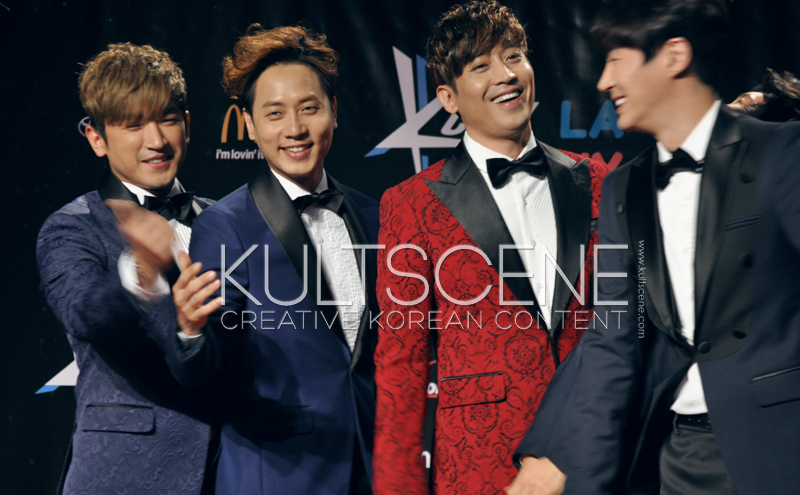
That’s probably the most endearing part about Shinhwa—with the passage of time, they made their own interpretations of what they were supposed to be, both as individuals and as a group, and molded the expectations to fit them than the other way round. As a unit, it makes them relatable. They never shy away from sharing both their successes and their struggles—the members have always been vocal about arguments among themselves, but have also been quick to admit how their long bonds have made working together easier. In a recent interview about their 13th studio album, member Jun Jin put the feeling into words: “If it weren’t for Shinhwa, Jun Jin wouldn’t exist.”
It isn’t just the marvelous teamwork; it’s also the fact that Shinhwa has never been a group that downplays their concerns, both as artists and businessmen. Group leader Eric expressed his anxiety about working in an industry where Shinhwa is one of the only groups left from the first generation: “We have no role models, nowhere to get advice. I think we have to grasp our future direction ourselves as we continue to work.”
They’ve also never had qualms about admitting to concerns about their company—Eric once talked about how Shinhwa realized that running a company was different than being an idol when they had to monitor how much money they spent on meals. Somewhere down the line, Shinhwa shed the skin of idols and became human, which brought them to closer to their fans.
Speaking of which, part of the reason why they remain popular favorites is also their relationships with their fans, which has always been more like that of bickering best friends and less like the typical fan-idol interactions. In fact, the group has never been hesitant to call out fans on their behavior. As a story about their first fan-sign goes, member Dong Wan told the fans that “Shinhwa is definitely not responsible for your lives.” He received some flak for that, but Dong Wan defended himself, saying that the “fans’ love could sometimes be over the top.” It was an example of how Shinhwa were mature since their early days, not caring about gratuitous fanservice and establishing a relationship of mutual trust with their fans.
K-pop is an ephemeral industry: every burst of fame and omnipresence is followed by a plateau where new groups come in and take over, and fandoms are inherited down the generations. Yet, Shinhwa is one of the only groups from the first generation of K-pop to not only continue making music, but to be loved by fans and the industry alike. They remain among the groups for which the word “groundbreaking” rings utterly true—because of their acceptance of the changing times; because of their self-deprecating and brilliant humor; and, most importantly, because of their steely resolve to always be one unit for themselves and their fans. They never take themselves very seriously, and that’s what makes them so endearing.
If you’re just starting out with Shinhwa, check out the remake of their music video, “All Your Dreams,” which was released on the 20th anniversary of their debut.
What’s your favorite Shinhwa song? Let us know in the comment section below. Be sure to subscribe to the site and follow us on Facebook, Twitter, Instagram, and Tumblr to keep up with all of our posts.
https://kultscene.com/wp-content/uploads/2015/08/DSC_09891.jpg531800KultScenehttps://kultscene.com/wp-content/uploads/2018/02/KULTSCENE-LOGO-2018-TRANSPARENT-RED.pngKultScene2018-04-05 09:43:382018-04-05 09:43:38The Shinhwa story: 20 years young & still going strong
Finally after a year and five months, the very last LOONA girl, Olivia Hye, was revealed. It’s a testament to the time and effort put into the project that so many people were eagerly anticipating this moment and the moments still to come. LOONA has given us probably the most interestingdebut roll out in K-pop (all music?) history, considering that twelve girls were rolled out over that year and a half through twelve solo singles, 4 sub-unit singles (with more to come), and countless fan theories about what it all meant. To look back on this all before the last unit finish out the debut project we ranked the twelve solo singles.
12. “Around You” by Hyunjin
Hyunjin has the undesirable position of starting us off with her solo track “Around You.” Produced by Lee Juhyung of Monotree, “Around You” is by no means a bad song. Its reverberating piano refrain is in fact a gorgeously simple riff to build a song around. It is helped along the way by some more crisp stabs of the keys and glances of guitar details. Structurally the track falters though. By moving towards a more conventional chorus and adding more parts “Around You” loses the fragility of its opening. That frailty worked wonders with Hyunjin’s equally weak voice as she sang of her foolish patience, and if it had remained small and instead gone for a big change at the climax it could have held onto that power longer. This begs the question though, could Hyunjin have even been able to pull that off? I guess we’ll find out with LOONA’s debut.
11. “Love Cherry Motion” by Choerry
Choerry is the member of LOONA who exists on all sides of the Mobius. To the uninitiated that just means she can interact with any of the other members right now. She’s also one of the most energetic of them all and musically both of these traits are very clear in “Love Cherry Motion.” Her bubbliness comes through right from the beginning and makes the song as fresh as it should sound for the summer. Its pre-chorus delves into deep bass EDM territory and finally culminates with Middle-Eastern style synths to change things around. Switching genres on a whim is an overdone staple in K-pop at this stage and “Love Cherry Motion” feels like LOONA was pandering to that. Without her story, the song would be just another version of that. Producers Ollipop, Hayley Aitken, and Kanata Okajima do handle it well though. They let the darker sound take over for the bridge before transitioning back into the softer side with an ease they seemingly wanted to avoid at first. They tell the story of Choerry’s flexibility in the story of LOONA but also how it feels for a young girl to fall in love.
10. “One and Only” by Go Won
The last few girls of the LOONA project were unlucky in that they had to live up to increasingly high expectations. It’s a somewhat unfair prospect given that the solo songs as a whole are meant more as calling cards for the particular members rather than singles built to chart. Go Won’s “One and Only” is, like her, slight and mysterious. Produced by Darren “Baby Dee Beats” Smith, “One and Only” is shimmering but simple synth pop. Go Won delivers an equally simple vocal in variety of ways amid the synths and processed drums. She half-chants half-raps her wonderful feelings of self-love brought on by the moonlight, raising her pitch with each line, mimicking the ascending synth; Go Won’s self-love is simple but comes from hard, repetitious work. But, apart from the bridge, “One and Only” undergoes essentially zero structural changes. It is straightforward to a fault, the song doesn’t really have to go anywhere, but that’s because Go Won doesn’t either. She is happy being her one and only.
9. “Eclipse” by Kim Lip
Kim Lip changed it all. From the opening chords of “Eclipse” and Lip’s more mature voice, it was clear LOONA were starting off on a new path. “Eclipse” grows with impassioned ease, building an eclectic bed of sounds through which Lip can sing between. Even from just the music video she was by far the most natural performer, blatantly a girl the group could be built around. Produced by Daniel “Obi” Klein and Charli Taft, “Eclipse” was a new style for LOONA with a silky variety of synths. The bridge is a moment to savour, fingersnaps and gorgeous vocals slowing things down to reveal the depth of what Kim Lip can do. Over time however, “Eclipse” grew somewhat tired. It feels too busy in comparison to LOONA’s more simple moments and not busy enough compared to what the ODD EYE CIRCLE girls would do after her. Its impact came from its surprise factor but couldn’t hold attention much longer after that.
8. “Egoist” by Olivia Hye feat. Jinsoul
Closing out the solo cycle of LOONA was Olivia Hye and her song “Egoist.” Olivia enlisted Jinsoul to feature as well as taking on her future bass sound. “Egoist” is a less volatile and unfortunately less interesting take on what Jinsoul previously displayed, though. The production, by Artronic Waves, LAB301, and Pablo Groove, is filled with great and varying details, from the repurposed whistles to the always growing percussions. Olivia can’t quite match the song for personality though. She is at first cold, and from among bassy moody synths and piano she sings of a broken relationship. She’s hiding her feelings, and in their place she only shows pain. As the song moves forwards, stronger more expressive synths take over from the piano. They lift Olivia not to express her emotions but forget them. She learns to love herself but unconvincingly so, leaving the song a bit lacking.
LOONA’s sole Chinese member Vivi faced a similar challenge as Hyunjin, failing to make her song strong enough to stand alone despite her weak voice. For this, the LOONA team went for a throwback vibe. On “Everyday I Love You” Vivi reveals her feelings through hushed, breathy vocals over some quintessential 90s beats, while synths shimmer as a guitar nervously plucks out an accompaniment. Everything comes together for an exciting chorus. In the absolute highlight of the track, the aforementioned guitar slides to introduce the chorus, it’s a cliched technique at this stage but that is precisely why it works so well. Horns join as Vivi pushes her small voice to high pitched delights. It’s one of the most simple but fun moments in all of LOONA’s discography.
6. “Vivid” by Heejin
LOONA began as they meant to go on, with Heejin and Monotree releasing “Vivid.” As an opener it is odd but no less polished than everything that followed it. “Vivid” is a brash confident offering from Heejin. Her voice goes up and down with ease, as she inflects her words with a cheeky rasp over filtered brass and piano. Her ease as a vocalist and acting in the video were a clear warning that these girls were here for serious business. At first watch I thought she was a new soloist, completely ready to take on the likes of Lim Kim with a more youthful quirky take. But even knowing that she is only one small part of an unknown whole doesn’t change how good this was though.
5. “Heart Attack” by Chuu
Vocally none of the girls quite matched Chuu in terms of personality on their solo tracks. She teases us at first, leaving small breaths between each line as she gradually rises to the chorus. As soon as she reaches it though, she drops the intensity only to rise it towards the end once again. From there she doesn’t have a chance to breathe, showing some of the biggest vocals LOONA has seen, with raps and adorable little “ooh oohs” for added color.” Ollipop and Hayley Aitken return to the LOONAverse to once again bridge gaps between the girls. Here they bring back the orchestral elements of LOONA ⅓ but don’t shy away from more modern beats and details. They weave a variety of horns, pianos, and synths around Chuu’s voice, constantly challenging her to one up herself. She matches them step for step and they come together brilliantly on the climax, letting go of any restraints that might have been holding them back.
4. “New” by Yves
Yves bit the apple and led LOONA out of Eden with her solo track, “New.” Similar to Kim Lip she opened her era with supreme confidence, showcasing strong vocals and dancing as she easily performs to the retro stylings of Brooke Toia, Daniel Caeser, and Ludwing Lindell; it’s 80s synth pop through a modern lens. The production is deceptively simple, with just synths, a beat, and Yves’ voice. In the first verse, the beat doesn’t fully reveal itself at first, starting with just finger snaps and a bass drum but in the second one, an ascending high hat is added, slowly rising to the chorus. Those same few elements are used in the chorus and to great dramatic effect: the synths are heavy and satisfying, and Yves’ vocals airy but totally under her control. This magnificent drama tells a story of self-confidence, a tale that Yves acts out with such sincerity.
Behind the languid chorus of “Singing in the Rain” lies LOONA’s most complex song to date. Jinsoul’s luscious future-bass track (produced by Caesar & Loui) juggles a number of sections, all of which come together in the end to crushing effect. It opens with the most exciting and varied drum beat I’ve heard in years, and slowly rises and falls. The complexity is helped by her vocal range, as she was the first one to rap and sing in her song giving “Singing In The Rain” an edge when it comes to the second verse. A different pre-chorus is also added for the second chorus, lending the song a surprising, driving intent. It’s essentially a series of overlapping and intersecting circles, growing in intensity with every new one added. The track culminates with the genuine Hollywood euphoria Jinsoul had been looking for. “I used to be untouchable and dangerous” she sings, suggesting a wicked unpredictability to her.
2. “Kiss Later” by Yeojin
No track was helped more by Monotree and LOONA’s dedication to using real instruments and orchestras than “Kiss Later”. Yeojin’s solo is a Broadway musical-inspired pop explosion that really fits the young girl’s voice. It starts off with a soft, shimmering melody, and Yeojin uses her tinny vocals to great effect before the song crashes into a frenzy of strings, horns, and percussion. It’s such a satisfying pay-off, and lends the rest of the song an unwavering kinetic energy. The music blends masterfully with Yeojin’s voice as she likes to talk-sing at times, even as she playfully follows the pointed details of the track with great strong syllables. As the youngest member of LOONA, her anxieties are rendered almost like a game. She understands that there are adult concepts at play and can avoid them, but doesn’t, and still has the most fun out of anyone. There hasn’t been a song in the last few years that quite matches “Kiss Later” for fun on every level.
1. “Let Me In” by Haseul
Ending LOONA’s first year was Haseul, with her soft voice whispering confusion of her identity on “Let Me In.” The song is the key to understanding the first five girls of LOONA, a track that rejects common pop rules in favour of building a unique world. Written and Produced by 오레오 [Oreo] and arranged by 웅 킴 [Oong Kim] “Let me in” is a purely orchestral song with no regular beat or modern instruments. Among this Haseul restrains herself at first. Her voice, pitched beautifully high, tells of a love so strong she feels like she is becoming one with her lover. These joyous feelings are highlighted by stunning musical details, including the tweets of a piccolo, delicate pulls of a harp, and, most of all, the strings that constantly change. It builds a sense of history made believable thanks to Haseul tiptoeing right up to her range; her voice is strong but vulnerable. Overall, Haseul and “Let Me In” define the identity struggle that the whole LOONA project was about. On the cusp of womanhood, these girls felt the push and pull of various paths and this song contains the dangers and joys of all those paths.
How would you rank all of LOONA’s solo singles? Let us know in the comment section below. Be sure to subscribe to the site and follow us on Facebook, Twitter, Instagram, and Tumblr to keep up with all of our posts.
https://kultscene.com/wp-content/uploads/2018/04/LOONA_all_members_collage.png15621564Joe Palmerhttps://kultscene.com/wp-content/uploads/2018/02/KULTSCENE-LOGO-2018-TRANSPARENT-RED.pngJoe Palmer2018-04-03 05:22:512018-04-03 05:22:51The 12 LOONA Solo Singles Ranked